Britain's New Government
Posted on 21 July 2026
Britain's New Government: What Andy Burnham's Premiership Means for Housing, Investment and Small Business
Who's who in the new Cabinet
Burnham moved fast on appointments, and a few choices raised eyebrows in Westminster:
A Housing: the biggest housebuilding push "since the post-war period"
Housing sits right at the centre of Burnham's early agenda. On his first day, he pledged what he called the biggest council housebuilding programme since the post-war era, alongside a commitment to end rough sleeping. The government says this builds on the existing £39 billion Social and Affordable Homes Programme secured under the previous administration, with a fuller ten-year housing plan promised later in the year.
The reaction has been mixed. Industry bodies like Propertymark have welcomed the renewed focus but are pushing for early consultation on how the manifesto commitment to 1.5 million new homes will actually be delivered, along with clarity on stamp duty and transaction reform. Meanwhile, think tanks such as the Centre for Policy Studies have questioned the sums, arguing that the announced funding may only deliver a fraction of the annual housing target once real build costs are factored in. There's also speculation — not yet confirmed by government — that Burnham could lower the threshold for the so-called "mansion tax" (the High Value Council Tax Surcharge) from £2 million to £1.5 million, which would pull an estimated 150,000 more households into that band from 2028.
Investment: markets watching, "Manchesterism" on the horizon
Financial commentators have coined the term "Manchesterism" to describe the more interventionist economic style expected from a Burnham-led Treasury, and investors are bracing for possible tax rises alongside higher public spending. Wealth managers are cautioning against knee-jerk portfolio moves, pointing out that domestic political change alone won't halt the global earnings that underpin markets like the FTSE 100, and suggesting that tax-advantaged vehicles such as VCTs, EIS and SEIS schemes may be worth a look for investors wanting to stay engaged with UK growth sectors despite the uncertainty.
Small business: a "pro-business" pledge under early strain
Burnham has been explicit that he wants to be seen as a pro-business leader, pointing to his record as Mayor of Greater Manchester. Bringing back Jonathan Reynolds — well regarded by both employers and unions from his earlier stint — is being read as a signal of continuity on that front. But the restructuring that folded the science and technology department into his new brief has already prompted pushback from parts of the tech sector, with industry groups and former government advisers warning that scrapping a standalone department for science and innovation risks slowing down support for firms just as they're being encouraged to invest in AI and new technology. Reynolds' early task will be proving that a bigger department can still be a strong, responsive champion for business, not a slower one.
More broadly, some voices in the investment and business community have warned that higher taxes and additional regulation — particularly around housing and property — could make Britain a harder place to invest and expand a business, with knock-on effects for hiring and productivity. It's still early days, and much will depend on the detail in the autumn statement and the promised ten-year plan.
The bigger picture: what this means for property, investment and small business funding
It's worth stepping back from the headlines. A new Prime Minister does not change the property market, the investment landscape or the small business funding environment overnight. Developers will continue to navigate viability pressures, construction costs, planning delays and changing buyer demand; investors will still weigh risk and return on their own terms; and small business owners will still need to manage cash flow, access to credit and day-to-day trading conditions — largely regardless of who occupies Downing Street.
However, Government policy plays an important role in shaping confidence, influencing where capital flows and creating the conditions needed for housebuilding, investment and enterprise to succeed. Decisions on taxation, regulation and support schemes can make the difference between a project, a portfolio or a business plan moving forward or being put on hold.
While many details are yet to emerge, housing, investment and small business all already appear firmly embedded within the Government's priorities. For property developers, investors, lenders, brokers and small business owners alike, the coming months should provide much greater clarity on planning, taxation, access to finance and the broader policy landscape.
For now, the focus should be less on predicting policies and more on understanding the signals already emerging. As the Government begins setting out its agenda, those signals should become clearer — giving developers, investors, lenders, brokers and small business owners the confidence to prepare for the opportunities and challenges ahead.
Changes in Government inevitably create uncertainty, but they also create opportunity. Those who succeed are rarely the ones who try to predict every policy announcement — they're the ones who remain adaptable, focus on viable projects and sound fundamentals, and work with funding partners and advisers who understand the market as it evolves.
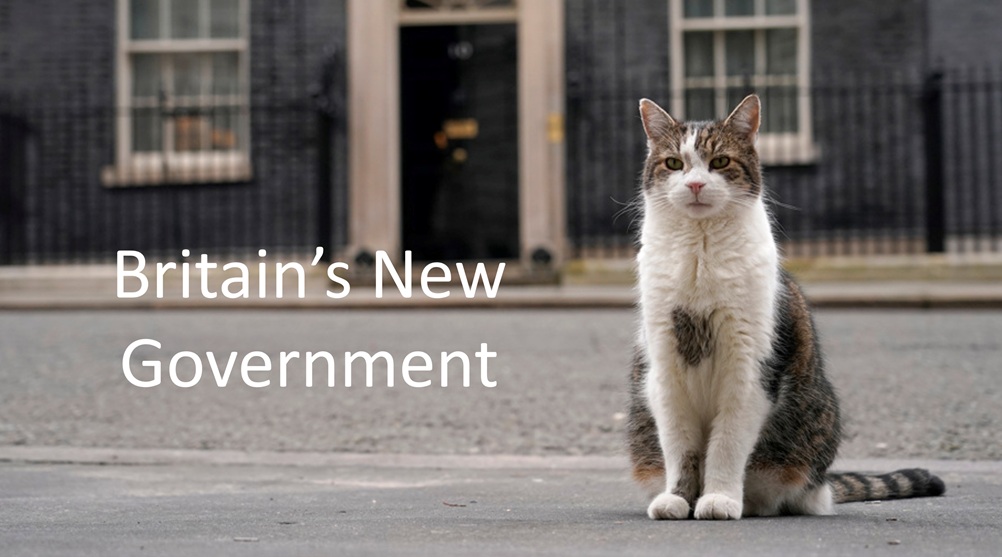
And finally, Larry keeps his job
Some things in Downing Street never change. Larry, the Chief Mouser to the Cabinet Office, was on the doorstep as usual to greet Burnham — his seventh Prime Minister since arriving at No.10 in February 2011 under David Cameron. Larry has now outlasted Cameron, Theresa May, Boris Johnson, Liz Truss, Rishi Sunak and Keir Starmer, and — unlike quite a few Cabinet ministers this week — his job appears entirely safe.
His unofficial X account marked the occasion with a reminder to the new administration that "politicians come and go" but cats, apparently, are permanent :)
#UKGovernment #AndyBurnham #Housing #Investment #SmallBusiness #SimpleCrowdfunding #Simple
Burnham moved fast on appointments, and a few choices raised eyebrows in Westminster:
- John Healey – Chancellor of the Exchequer. The former Defence Secretary's move to the Treasury surprised commentators, who had widely tipped Ed Miliband or Shabana Mahmood for the job. Healey's background as a former housing minister is seen as a deliberate pairing with Burnham's housebuilding ambitions.
- Angela Rayner – Housing Secretary. Rayner returns to the housing brief just ten months after leaving it (and the Deputy PM role) following a tax underpayment matter, for which she has since been cleared of wrongdoing.
- Ed Miliband – Foreign Secretary. A promotion from his previous role as Energy Secretary, reflecting Burnham's preference for spending less time on the international circuit himself.
- Shabana Mahmood – Home Secretary. Stays in post, continuing her work on migration policy.
- Jonathan Reynolds – Business, Innovation, Science and Trade Secretary. Reynolds returns to run business policy, now in an enlarged department after the Department for Science, Innovation and Technology was folded into his brief.
- Yvette Cooper – Health Secretary, Wes Streeting – Defence Secretary, and Pat McFadden – Work and Pensions Secretary round out some of the other major moves, alongside a clear-out of several Starmer allies, including former Chancellor Rachel Reeves and former Business Secretary Peter Kyle. Notably, Burnham hasn't named a formal Deputy PM, though Louise Haigh is widely seen as filling that role in practice.
A Housing: the biggest housebuilding push "since the post-war period"
Housing sits right at the centre of Burnham's early agenda. On his first day, he pledged what he called the biggest council housebuilding programme since the post-war era, alongside a commitment to end rough sleeping. The government says this builds on the existing £39 billion Social and Affordable Homes Programme secured under the previous administration, with a fuller ten-year housing plan promised later in the year.
The reaction has been mixed. Industry bodies like Propertymark have welcomed the renewed focus but are pushing for early consultation on how the manifesto commitment to 1.5 million new homes will actually be delivered, along with clarity on stamp duty and transaction reform. Meanwhile, think tanks such as the Centre for Policy Studies have questioned the sums, arguing that the announced funding may only deliver a fraction of the annual housing target once real build costs are factored in. There's also speculation — not yet confirmed by government — that Burnham could lower the threshold for the so-called "mansion tax" (the High Value Council Tax Surcharge) from £2 million to £1.5 million, which would pull an estimated 150,000 more households into that band from 2028.
Investment: markets watching, "Manchesterism" on the horizon
Financial commentators have coined the term "Manchesterism" to describe the more interventionist economic style expected from a Burnham-led Treasury, and investors are bracing for possible tax rises alongside higher public spending. Wealth managers are cautioning against knee-jerk portfolio moves, pointing out that domestic political change alone won't halt the global earnings that underpin markets like the FTSE 100, and suggesting that tax-advantaged vehicles such as VCTs, EIS and SEIS schemes may be worth a look for investors wanting to stay engaged with UK growth sectors despite the uncertainty.
Small business: a "pro-business" pledge under early strain
Burnham has been explicit that he wants to be seen as a pro-business leader, pointing to his record as Mayor of Greater Manchester. Bringing back Jonathan Reynolds — well regarded by both employers and unions from his earlier stint — is being read as a signal of continuity on that front. But the restructuring that folded the science and technology department into his new brief has already prompted pushback from parts of the tech sector, with industry groups and former government advisers warning that scrapping a standalone department for science and innovation risks slowing down support for firms just as they're being encouraged to invest in AI and new technology. Reynolds' early task will be proving that a bigger department can still be a strong, responsive champion for business, not a slower one.
More broadly, some voices in the investment and business community have warned that higher taxes and additional regulation — particularly around housing and property — could make Britain a harder place to invest and expand a business, with knock-on effects for hiring and productivity. It's still early days, and much will depend on the detail in the autumn statement and the promised ten-year plan.
The bigger picture: what this means for property, investment and small business funding
It's worth stepping back from the headlines. A new Prime Minister does not change the property market, the investment landscape or the small business funding environment overnight. Developers will continue to navigate viability pressures, construction costs, planning delays and changing buyer demand; investors will still weigh risk and return on their own terms; and small business owners will still need to manage cash flow, access to credit and day-to-day trading conditions — largely regardless of who occupies Downing Street.
However, Government policy plays an important role in shaping confidence, influencing where capital flows and creating the conditions needed for housebuilding, investment and enterprise to succeed. Decisions on taxation, regulation and support schemes can make the difference between a project, a portfolio or a business plan moving forward or being put on hold.
While many details are yet to emerge, housing, investment and small business all already appear firmly embedded within the Government's priorities. For property developers, investors, lenders, brokers and small business owners alike, the coming months should provide much greater clarity on planning, taxation, access to finance and the broader policy landscape.
For now, the focus should be less on predicting policies and more on understanding the signals already emerging. As the Government begins setting out its agenda, those signals should become clearer — giving developers, investors, lenders, brokers and small business owners the confidence to prepare for the opportunities and challenges ahead.
Changes in Government inevitably create uncertainty, but they also create opportunity. Those who succeed are rarely the ones who try to predict every policy announcement — they're the ones who remain adaptable, focus on viable projects and sound fundamentals, and work with funding partners and advisers who understand the market as it evolves.
And finally, Larry keeps his job
Some things in Downing Street never change. Larry, the Chief Mouser to the Cabinet Office, was on the doorstep as usual to greet Burnham — his seventh Prime Minister since arriving at No.10 in February 2011 under David Cameron. Larry has now outlasted Cameron, Theresa May, Boris Johnson, Liz Truss, Rishi Sunak and Keir Starmer, and — unlike quite a few Cabinet ministers this week — his job appears entirely safe.
His unofficial X account marked the occasion with a reminder to the new administration that "politicians come and go" but cats, apparently, are permanent :)
#UKGovernment #AndyBurnham #Housing #Investment #SmallBusiness #SimpleCrowdfunding #Simple
Latest Crowdfunding News
- Britain's New Government
- UKCFA AGM
- Budget 2025
- Project Due Diligence
- UK Property Market June 2025
- Chancellor Reeves Mansion House 2025
- Navigating the Landscape of Property in 2025
- Investor Benefits: Accessible Property Investing
- UK Property Market 2024: Recap and Predictions
- IFISA Provider of the Year 2024
- Fundraiser Benefits
- Financial Promotions Order
- Unlock the Power of Property ISA Investing
- Celebrating 10 Years
- The Importance Of Switching Off
- P2P Finance Awards 2023
- Property Investment: Equity Vs Peer to Peer Lending
- ISA Investing
- Simple Crowdfunding 2022 Review & Highlights
- Shortlist - CEO of the Year Award